Exploration of Libraries and the Use of Mobile Devices
Library Projects in developing nations
CODE
While exploring the CODE website at first I was skeptical. My first thought was how much money actually impacts the programs. I was delighted to learn that 94% of the money goes directly to the CODE programs. My second thought negative thought was is this a repeat of colonization practices. Are we trying to "educate" those less fortunate in our western view points and values. Once again I was elated to learn that it was culturally appropriate methods employed to improve literacy within the countries. In reading the "Our Programs" I felt connected to the organization empowering women, working with the "countries' teacher development institutions" to produce highly qualified individuals to teach literacy through "high-qulaity locailly relevant reading and learning materials". This organization I feel I could support.
While examining the CODE website I thought of a technology project I learned while doing my MET.
Hole in the Wall
The Hole in the Wall experiments shows how empowering technology can be in enabling collaboration and self taught learning in kids with little to no education. It also shows how technology has the potential to create equality.
As I am passionate about Indigenous education I searched library projects occuring in Mexico. This is a project that came up in my search.
Libros para Todos
Libros para Todos is a small non-profit orgainzation based in the USA. It's mission is to bring books, after school programs and encouraging reading to children living in rural communities of Mexico. The gap in education between rural communities versus urban centres in huge therefore this organization is trying to minize this gap. In Global Giving website you can read about the 7 completed funded projects and the 1 project occuring now.
The organization does appear to a worthwhile organization to invest in or volunteer for. The books are culturally relevant with Mexican author, as well, the books are available in Spanish and English. I think the idea of creating 4 mobile libraries and training the commuinity members to be the staff is very forward thinking and empowering. Although, the project does not expand internet access it does create literacy opportunites. The small non-profit organization does use social media platforms; website, Facebook, and Instagram to promote it's invaluable cause.
Mobile Devices in the Library
The use of mobile devices in the library such as smartphones, iPads, and chromebooks can have many advantages such as; ubiquitous learning, virtual field trips, access to information especially when space is an issue as ebooks take up little room, engaging content creation by students and staff. But there can be disadvantages such as distraction, internet connectivity, battery life, and cost.
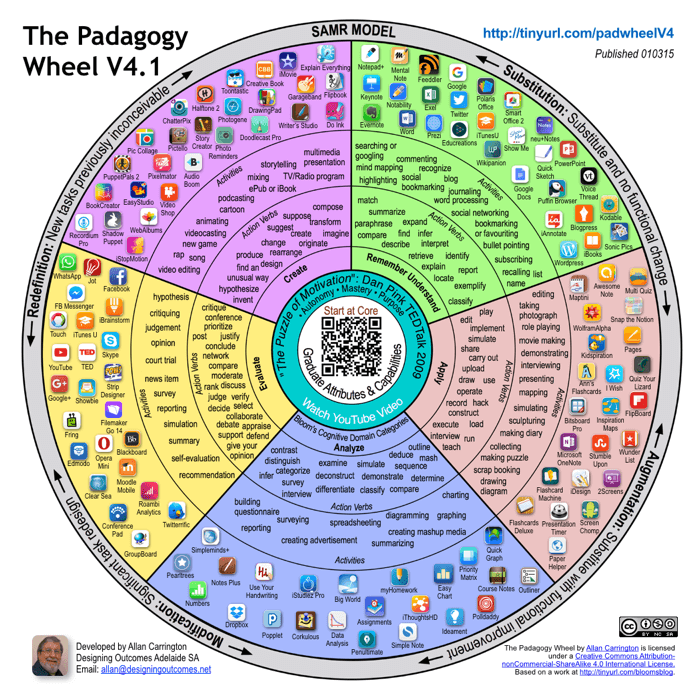
The SAMR Model shows how a teacher can incorporate mobile devices into their pedagogy.
In the paper, Turning on mobile learning: global themes further examined how mobile learning could allow for higher quality, personalized and collaborative education content creation. As well as, situated learning and "reach marginalized populations and improve education systems" (p. 10). Although, the article did stress the need for a holostic approach in partnerships between "content creators and publishers and install telecommunication systems, mobile network operations and device manufacturers" (p. 13).
Mobile learning does have it place within the library but digital citizenship must be taught and like anything it should be done in moderation.


Hi Chelcy,
ReplyDeleteI'm glad you mentioned the cost associated with mobile learning initiatives. In an economically thriving community, you're right, technology is ubiquitous. So it may be easy to overlook the start-up costs associated with bringing mobile devices like tablets or Chrombooks to a developing area. On top of that, the infrastructure needed to maintain a wireless network, upkeep the devices, etc. adds to the cost and creates further barriers. It's organizations like the ones you mentioned which help to knock those barriers down!
Great post! I'll definitely be looking into the "Turning on Mobile Learning" paper you linked!
I appreciate your reflection regarding the initiatives you explored. Your thoughtful discussion models how others might evaluate initiatives to ensure that they are creating authentic and culturally relevant supports.
ReplyDelete